
How Long Does Cooked Salmon Last in the Fridge? Cooked, Raw and Thawed
Cooked salmon keeps 3 to 4 days in the fridge; raw or thawed salmon only 1 to 2, per FDA. How to store, freeze and reheat it, and how to tell it's gone bad.
NTRLY Team
Editorial
6 min read
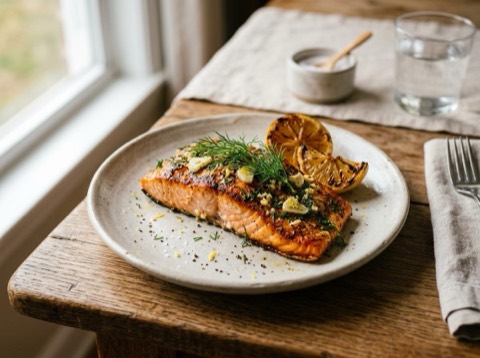
Cooked salmon lasts 3 to 4 days in the refrigerator. Raw salmon, including frozen salmon you've thawed, lasts only 1 to 2 days. Those are the figures for cooked fish and for fatty fish in FDA's refrigerator and freezer storage chart, and they assume a fridge that holds 40°F or below.
Salmon is one of the easiest fish to cook in a big batch: one sheet pan of fillets can cover dinner tonight and lunch tomorrow. Here's how long each kind keeps, how to store and freeze it, and how to use up the rest before it runs out of time.
The short answer
Cooked salmon, fridge: 3 to 4 days. Raw salmon, fridge: 1 to 2 days. Thawed raw salmon, fridge: 1 to 2 days from when it finished thawing; cook it within that window. Raw salmon, freezer: 2 to 3 months for best quality, per FDA, because fatty fish loses quality faster than lean fish like cod (6 to 8 months). Cooked salmon, freezer: 4 to 6 months, per FDA's chart for cooked fish. On the counter: no more than 2 hours, or 1 hour above 90°F.
How long does cooked salmon last in the fridge?
Three to four days, counted from the day you cooked it. That's the same window as most cooked leftovers, from cooked chicken to cooked shrimp. Baked, grilled, pan-seared, air-fried or poached, it doesn't matter: once the salmon is cooked, the clock is the same.
If the salmon is part of a dish, go by the most perishable ingredient. Salmon patties, salmon pasta in a cream sauce, or a salmon salad dressed with mayo are all 3-day leftovers at most. Rice bowls with salmon have a second clock running too: see how long cooked rice lasts.
Does an airtight container make it last longer?
An airtight container doesn't add days, but it does help you get the full 3 to 4. A sealed container or a zip-top bag keeps the fish from drying out, stops it picking up other smells, and keeps the smell of salmon off everything else in your fridge. Leaving a fillet on an uncovered plate is how you end up with dry, fishy leftovers on day two.
How long does raw salmon last in the fridge?
One to two days. That applies to fresh fillets from the seafood counter and to vacuum-packed fillets once you've opened them. A sealed package from the store may carry a use-by date; go by that date while it's sealed, and by the 1-to-2-day rule once it's open. FDA's seafood safety page says to put seafood on ice or in the refrigerator or freezer soon after buying it, and only to keep it in the fridge if you'll use it within 2 days. If your plans change, freeze it the same day.
Smoked salmon is a different product with a much longer window. We cover it in how long smoked salmon lasts in the fridge.
How long does salmon last after thawing?
Thawed raw salmon gets the same 1 to 2 days as fresh, counted from when it finished thawing. FDA recommends thawing seafood in the refrigerator overnight. If you need it faster, seal the salmon in a plastic bag and submerge it in cold water, or use the microwave's defrost setting and stop while it's still icy but pliable. Salmon thawed in cold water or the microwave should be cooked right away, not put back in the fridge for later. Never thaw it on the counter.
How long can cooked salmon sit out?
No more than 2 hours at room temperature, or 1 hour when it's above 90°F, like at a summer cookout. After that, throw it out rather than putting it back in the fridge. For a buffet or a platter of cold poached salmon, keep it on ice, and swap in a fresh platter rather than topping up one that has been out for hours.
How to store cooked salmon
Get it cold fast. Refrigerate leftovers within 2 hours of cooking. If you cooked a whole side of salmon, cut it into portions so it cools quickly instead of staying warm in the middle.
Use an airtight container or wrap each portion tightly. Portions are easier to reheat evenly and to pack for lunch.
Keep it on a shelf, not in the door. The door is the warmest part of the fridge. FDA recommends a refrigerator thermometer to check that your fridge really holds 40°F or below.
Keep raw and cooked apart. Store raw salmon on the bottom shelf in a sealed container or on a plate, so its juices can't drip onto cooked food or anything you'll eat without cooking.
Label it. Write the date you cooked it on the container. It's surprisingly hard to remember on Thursday whether the salmon was from Sunday or Monday.
Can you freeze cooked salmon?
Yes. Let it cool, then wrap each portion tightly in plastic wrap or foil and put the portions in a freezer bag with the air pressed out. FDA's chart gives cooked fish 4 to 6 months in the freezer for best quality. Frozen food stays safe indefinitely at 0°F, but salmon's oils can turn stale-tasting over time, so date the bag and use it sooner rather than later.
Thaw frozen cooked salmon in the fridge overnight. It's best flaked into dishes where it's warmed briefly or served cold, like fried rice, pasta, salmon patties, salads or wraps, where any change in texture won't matter. For more on what freezes well, see our freezer storage guide.
How to reheat cooked salmon
Salmon dries out fast the second time it's heated, so go low and slow. In the oven, put it in a covered dish with a splash of water or broth at a low temperature, around 275°F, until it's heated through. In the microwave, cover it, use medium power, and heat it in short bursts. Whichever you use, leftovers you reheat should be steaming hot all the way through.
You don't have to reheat it at all. Cold leftover salmon is good flaked over a salad or a grain bowl, mashed with a little yogurt or mayo for a sandwich, or folded into scrambled eggs at the very end.
How to tell if salmon has gone bad
Throw it out if you notice a sour, ammonia-like or strongly fishy smell, a slimy or sticky surface, a dull gray color, or mold. FDA notes that spoiled raw seafood can smell sour, rancid, fishy or of ammonia, and that these smells get stronger after cooking. Fresh raw salmon should have a mild smell and flesh that springs back when you press it.
Don't use a sniff test to stretch the window, though. The bacteria that cause food poisoning usually don't change how food looks or smells, so salmon that's past 3 to 4 days cooked, or 2 days raw, should go even if it seems fine. When in doubt, throw it out.
Cooking salmon safely
FDA says most seafood should be cooked to an internal temperature of 145°F. Without a thermometer, fish is done when the flesh separates easily with a fork. FDA also advises people at higher risk of foodborne illness, including pregnant women, children, older adults and anyone with a weakened immune system, to avoid raw or undercooked fish, such as some sushi and ceviche. Ask your doctor if you're not sure whether that includes you.
Salmon and protein
USDA's FoodData Central lists cooked farmed Atlantic salmon at 22.1 grams of protein and 206 calories per 100 grams, so a 4-ounce portion gives you about 25 grams of protein. That makes leftover salmon one of the easiest ways to add protein to lunch. For daily targets, see how much protein you need.
Quick ways to use up leftover salmon
The easiest way to beat a 3-day window is to plan the leftovers the day you cook. Ideas from our recipe collection: salmon and avocado salad, baked salmon tacos, a Korean BBQ salmon bowl, Thai-spiced salmon patties, a microwave salmon and spinach burrito, or a spicy sriracha salmon dip. If you're cooking a fresh batch, try lemon garlic roasted salmon, crispy air-fried salmon or grilled miso salmon, and cook an extra fillet on purpose.
Keeping track without remembering dates
Four days goes by fast when the container is behind the milk. NTRLY's Kitchen keeps your fridge, freezer and pantry in one list. Add your leftover salmon and you get a countdown based on food safety guidance, with a reminder before it runs out of time, so it becomes tomorrow's lunch instead of trash.