
How Much Protein Do You Actually Need?
The RDA is 0.8 g per kg of body weight, but active people often aim higher. How to work out a sensible daily target and hit it with ordinary food.
The NTRLY Team
Digital Summit LLC
6 min read
Protein advice ranges from "most people already get plenty" to "eat a gram per pound or you'll lose all your muscle." Both claims contain some truth, which is why the topic is so confusing. The useful answer depends on who you are and what you are trying to do. Here's how the official guidance works, where it comes from and how to turn it into a number you can actually use.
The official baseline: 0.8 grams per kilogram
The Recommended Dietary Allowance (RDA) for protein, set by the National Academies, is 0.8 grams per kilogram of body weight per day for healthy adults. To convert from pounds, divide your weight by 2.2. A 150-pound adult weighs about 68 kilograms, so the RDA works out to roughly 55 grams of protein a day. A 200-pound adult (about 91 kilograms) would need roughly 73 grams.
It's important to understand what the RDA is. It is the amount that meets the basic needs of nearly all healthy adults — a floor that prevents deficiency, not a target designed for building muscle, recovering from hard training or holding onto lean mass while you lose weight. Many Americans already eat more than the RDA, but that doesn't mean more can't be useful in some situations.
When people aim higher
Regular exercise, especially strength training, increases the amount of protein your body can put to use. The International Society of Sports Nutrition's position is that most exercising people do well with about 1.4 to 2.0 grams per kilogram per day. For that 150-pound person, that's roughly 95 to 135 grams.
People eating in a calorie deficit to lose weight often choose the upper part of that range too, because protein helps preserve muscle when calories are reduced and tends to keep you fuller than the same calories from carbohydrate or fat.
Age matters as well. Muscle mass naturally declines over time, and some researchers argue that older adults may benefit from more protein than the RDA, along with strength training. This is an active area of study rather than settled guidance.
Some people should not raise their protein on their own. If you have kidney disease or another medical condition, are pregnant or breastfeeding, or have been given a specific diet by your doctor, ask your doctor or a registered dietitian what's right for you. This article is general information, not a personal recommendation.
Another way to check: percent of calories
The National Academies also give an Acceptable Macronutrient Distribution Range for protein of 10 to 35 percent of daily calories. Protein has about 4 calories per gram, so on a 2,000-calorie day that range is 50 to 175 grams. Most sensible gram-per-kilogram targets land comfortably within it.
How to pick your number
Start with your weight in kilograms. If you're mostly sedentary and happy with your current routine, the RDA of 0.8 g/kg is a reasonable minimum. If you exercise regularly or are trying to lose fat while keeping muscle, choose somewhere between 1.2 and 1.6 g/kg to start — it's easier to sustain than the very top of the range. Round to a friendly number and track it for a couple of weeks before deciding whether to change it.
If you're carrying significant extra weight, a gram-per-kilogram target based on your current weight can come out higher than you need. Many people base it on a goal weight or a reasonable middle ground instead.
Spread it across the day
A target of 120 grams is daunting as one number and manageable as four meals of about 30 grams. Building each meal around a protein source — rather than adding protein as an afterthought to a carb-heavy plate — is the single most effective change most people can make. Breakfast is usually where the gap is; a typical bowl of cereal or a piece of toast barely registers.
What 25–30 grams looks like
Approximate amounts, which vary by brand and preparation, so check labels where you can: 3 ounces of cooked chicken breast has roughly 25 grams. A 3-ounce serving of canned tuna has about 20. A single-serve container of plain nonfat Greek yogurt has around 15 to 18, and a half cup of cottage cheese around 12 to 14. One large egg has about 6 grams, a cup of cooked lentils around 18, and two tablespoons of peanut butter about 7 to 8.
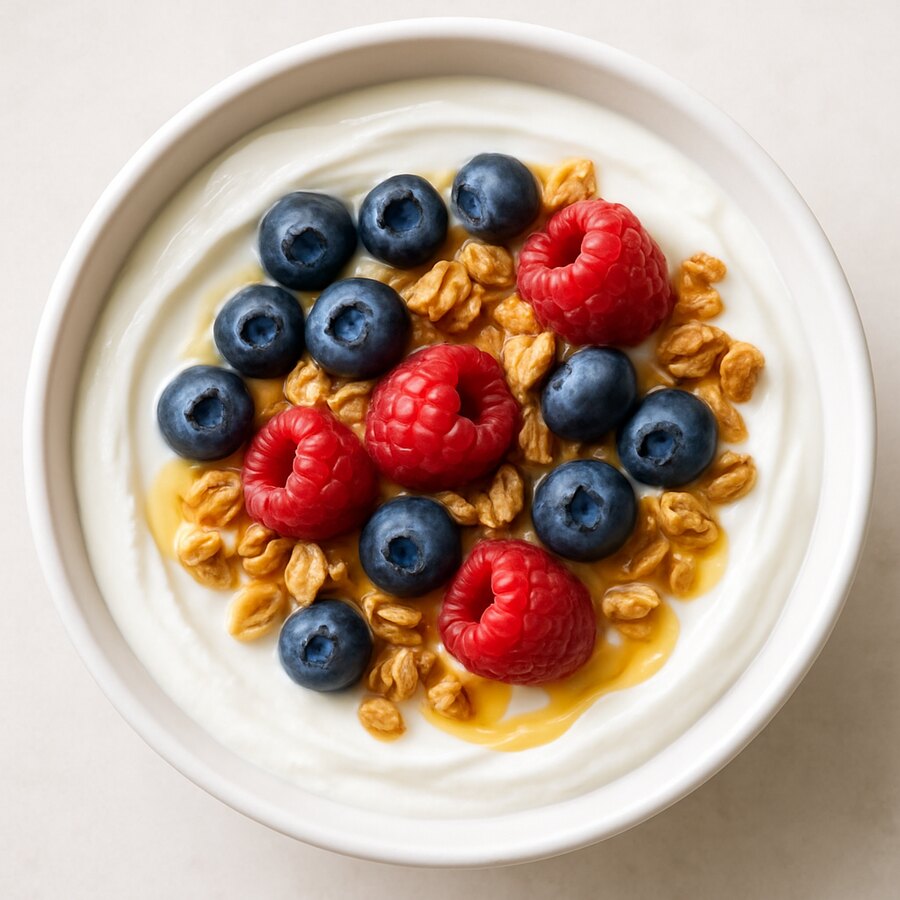
Combinations close the gap easily. Greek yogurt with a handful of nuts at breakfast, a tuna or chicken sandwich at lunch, lentils with your dinner and a glass of milk or a protein-rich snack in between will put most people well past the RDA without supplements.
Do you need protein powder?
No, but it can be convenient. Powders and shakes are simply a fast source of protein. Food sources usually bring fiber, vitamins and minerals along with the protein, so it makes sense to treat powder as a backup for busy days rather than the foundation of your diet. Dietary supplements aren't approved by the FDA before they're sold, so look for products with third-party testing.
Tracking protein with NTRLY
NTRLY shows your protein next to your calories, carbs and fat for every meal and every day, so you can see where the gaps are — often breakfast. You can set your own protein target, and Hey Coach can look at what you've logged and suggest a higher-protein option from the foods already in your kitchen.