
How Long Do Hard-Boiled Eggs Last in the Fridge? Peeled and Unpeeled
Hard-boiled eggs keep 1 week in the fridge, peeled or in the shell, per FDA. How to store them, why they spoil faster than raw eggs, and when to toss them.
NTRLY Team
Editorial
6 min read
Hard-boiled eggs last 1 week in the refrigerator at 40°F or colder, whether they're still in the shell or already peeled. That's the U.S. Food and Drug Administration's guidance in What You Need to Know About Egg Safety: use or eat hard-cooked eggs, in the shell or peeled, within 1 week after cooking. Refrigerate them within 2 hours of cooking, or within 1 hour if it's above 90°F.
That surprises a lot of people, because a carton of raw eggs keeps much longer. Here's why cooking shortens the clock, how to store hard-boiled eggs so they stay good all week, and what the rule means for egg salad, deviled eggs and Easter eggs.
The short answer
Hard-boiled eggs in the shell, fridge (40°F or below): 1 week. Peeled hard-boiled eggs, fridge: 1 week. Egg salad, deviled eggs and other dishes made with cooked eggs: 3 to 4 days, per FDA's rule for leftover cooked egg dishes. Raw eggs in their original carton: use within 3 weeks for best quality, per FDA. On the counter: no more than 2 hours, or 1 hour above 90°F.
Count the week from the day you cooked the eggs, not the date on the carton.
Why hard-boiled eggs don't last as long as raw eggs
A raw egg in its shell is fairly well protected. Its shell and the membranes inside it act as a barrier, and in the U.S. eggs are washed and kept cold from the farm to the store. Boiling changes that. Cooking can weaken the shell's outer coating and the membranes under it, and the cooked white is moist and full of protein, which is just what bacteria need to grow.
That's why a hard-boiled egg is treated as a cooked leftover with a 1-week limit, while a raw egg in the carton keeps for weeks.
Peeled vs. unpeeled hard-boiled eggs
FDA gives the same 1-week window for both. The difference is quality, not safety.
Unpeeled eggs keep their texture best. The shell stops the white from drying out and from picking up smells from the rest of the fridge. If you're boiling a batch for the week, leave them in the shell and peel each one when you're ready to eat it.
Peeled eggs are handy for grab-and-go snacks, but they dry out faster. Store them in an airtight container, and lay a damp paper towel over them to keep the whites from getting rubbery. Change the towel every day or two.
Either way, the eggs still have to be eaten within a week of cooking.
How to store hard-boiled eggs
Cool them quickly. After cooking, move the eggs into a bowl of ice water or under cold running water for several minutes. This stops the cooking and gets them into the fridge sooner. Then dry them and refrigerate them.
Don't leave them out to cool for hours. FDA says never to leave cooked eggs or egg dishes out of the refrigerator for more than 2 hours, or for more than 1 hour when it's above 90°F. Bacteria that cause illness grow fastest between 40°F and 140°F.
Use a covered container. A lidded container or a zip-top bag keeps the eggs from absorbing odors and protects the rest of your fridge from the sulfur smell cooked eggs can give off.
Store them on a shelf, not in the door. The door is the warmest part of the fridge and its temperature swings every time you open it. A shelf in the main compartment stays colder and steadier.
Label them. Write the cooking date on the container or mark the shells with a pencil. If you keep raw and cooked eggs in the fridge at the same time, a mark on the shell also tells you which is which.
Can you eat hard-boiled eggs after 7 days?
FDA's guidance ends at 1 week. Eggs on day eight or ten are outside that window, even if they look and smell fine. The bacteria that cause food poisoning usually don't change how food looks, smells or tastes, so the cooking date is a better guide than a sniff test. When in doubt, throw them out.
Throw hard-boiled eggs out sooner if you notice a slimy or chalky texture, a sour or rotten smell, or any mold, or if they sat at room temperature longer than 2 hours.
What about the green ring around the yolk?
A gray-green ring around the yolk comes from overcooking. When eggs cook too long or too hot, iron in the yolk reacts with sulfur in the white. It looks odd and can taste a little sulfurous, but it isn't a sign of spoilage, and the egg is fine to eat. To avoid it, don't overcook the eggs, and chill them in ice water right after cooking.
Can you freeze hard-boiled eggs?
Whole hard-boiled eggs don't freeze well. The cooked whites turn tough, rubbery and watery when they thaw. FDA also says eggs should not be frozen in their shells. If you want to freeze eggs, freeze them raw: beat the yolks and whites together and freeze them in a covered container, and use them within 1 year, per FDA. Cooked yolks on their own freeze better than whites and can be crumbled over salads later. For everything else in your freezer, see our guide to freezing almost anything.
Egg salad and deviled eggs
Once hard-boiled eggs are mixed into another dish, the clock gets shorter. FDA says to refrigerate leftover cooked egg dishes and use them within 3 to 4 days. That covers egg salad, deviled eggs, and potato or pasta salads with chopped egg. Mayonnaise doesn't add time.
Keep these dishes cold until you serve them. For parties and picnics, FDA suggests keeping cold egg dishes on ice if they'll be out longer than 2 hours, and packing them in an insulated cooler with ice or frozen gel packs. Keep the cooler in the car, not the warmer trunk.
Easter eggs and egg hunts
FDA's advice is to hard-boil eggs before coloring them and not to eat eggs after they've been hidden or played with, because bacteria picked up on the shells can get into the egg. If you want to eat some of your dyed eggs, keep those in the fridge and use a separate set for the hunt.
A protein snack worth keeping on hand
One large hard-boiled egg has about 6 grams of protein, based on USDA FoodData Central (12.6 grams per 100 grams, and a large egg weighs about 50 grams). That makes a batch of eggs on Sunday one of the cheapest ways to add protein to breakfasts and lunches. If you're working out how much you need, see how much protein you need.
Quick ways to use them up
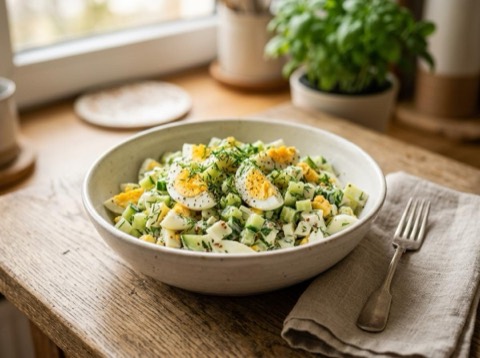
A few ideas from our recipe collection: cucumber and egg salad, a creamy egg and avocado salad for sandwiches or lettuce wraps, and spicy tuna and egg salad for a high-protein lunch. If you're planning several days of meals, our meal prep guide shows how to split a batch between the fridge and the freezer, and Leftovers Worth Looking Forward To has more ideas.
Keeping track without remembering dates
A week is easy to lose track of, especially when raw and cooked eggs share a shelf. NTRLY's Kitchen keeps your fridge, freezer and pantry in one list. Add hard-boiled eggs and you get a 7-day countdown based on food safety guidance, with a reminder before they run out of time. The same goes for cooked rice, cooked chicken and cooked pasta.